
Forget the Smoking‑Gun
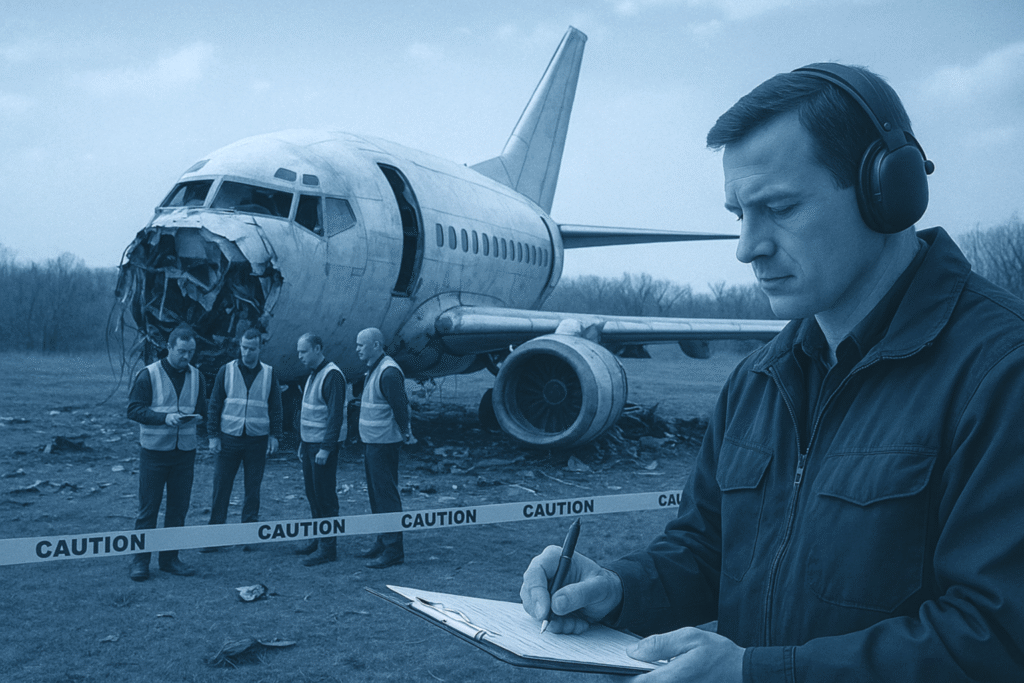
Ask a veteran air‑safety inspector how a jet ends up in a cornfield and you will never hear a single-minded answer. “Pilot error,” “weather,” “engine failure”—each alone is too tidy. The real explanation is always a combination of factors, a chain reaction: overlooked maintenance paperwork, a poorly designed alert, a storm cell that blooms faster than radar refreshes, a split‑second human slip. Air‑crash investigation therefore starts with a bias toward complexity: assume the event is systemic, not singular.
That assumption is exactly what any modern investigative workflow—whether corporate fraud, cyber intrusion, or supply‑chain loss—desperately needs.
The Go‑Team Mind‑Set
When an aircraft accident occurs, a lead investigator assembles a Go Team. This is not a hierarchy but a circle of specialties: metallurgists, avionics engineers, software architects, human‑factors psychologists, meteorologists, air‑traffic experts, and organisational‑culture analysts. Each arrives with the same mandate: collect facts from their own lens before anyone debates causes:
- Engineering Analysis: Engineering analysis involves examining the aircraft’s design, structure, and systems. Investigators assess mechanical failures, material integrity, and the performance of aircraft components to determine if any engineering flaws contributed to the crash.
- Human Factors: Human factors analysis focuses on the actions and decisions of the flight crew and other personnel involved in the operation of the aircraft both before and during the flight. This discipline examines issues such as pilot error, communication breakdowns, crew dynamics and adherence to protocols.
- Meteorology: Meteorological investigations assess weather conditions at the time of the accident. Investigators analyze data related to visibility, wind patterns, turbulence, and other atmospheric conditions that may have influenced the flight.
- Flight Data Analysis: Flight data analysis involves reviewing data from the flight data recorder (FDR) and cockpit voice recorder (CVR). This information provides insights into the aircraft’s performance, pilot actions, and any anomalies leading up to the crash.
- Forensic Investigation: Forensic investigation includes the examination of human remains and reconstruction of the wreckage. This discipline helps to identify the cause of fatalities and any potential mechanical failures or criminal activities that may have contributed to the accident.
- Regulatory Compliance: Investigators assess whether the airline and crew complied with aviation regulations and standards. This includes reviewing maintenance records, training certifications, and operational procedures to ensure adherence to safety protocols.
- Accident Reconstruction: Accident reconstruction involves creating a detailed simulation of the crash event. This discipline uses data from various sources to recreate the sequence of events leading to the accident, helping to visualize the circumstances surrounding the crash.
- Public Safety and Policy: This discipline examines the broader implications of the crash on public safety and aviation policy. Investigators may recommend changes to regulations, training, or operational practices to prevent future accidents.
Building the Master Timeline
After weeks of parallel digging, the lead investigator overlays every strand of data on a single chronological map. That unified timeline is where invisible relationships appear: a maintenance shortcut taken three months earlier lines up with a cockpit warning light that the crew dismissed, which aligns with a moment of heavy workload just as weather deteriorated.
Key takeaways for non‑aviation investigators:
- Recruit diverse expertise early. Each skilled investigator brings a different perspective and can identify a different piece of the puzzle.
- Work in parallel, not sequence. Separate disciplines gather data simultaneously preventing early theories from colouring later evidence.
- Share raw findings, not opinions. Teams present timelines, sensor readouts, duty rosters—no speculation—to to maintain the accuracy of all subsequent evaluations.
For other fields, the lesson is clear: evidence acquires greater significance when analyzed through a temporal lens. Whether you are tracing suspicious fund transfers or mapping disinformation campaigns, a multi‑source timeline exposes interactions and anomalies no silo could see.
From Findings to Fixes
The goal of an air‑safety report is not punishment but prevention. Once causes are identified, corrective actions target every weak layer—training revisions, software patches, checklist tweaks, even cultural shifts inside a manufacturer. The success metric is future flights that never make headlines.
The statistics speak for themselves. Over the past 25 years, air crash investigations have played a pivotal role in dramatically improving aviation safety worldwide. Fatal accidents have decreased 85%. Annual global passenger deaths have decreased over 60%. These improvements are the direct result of implementing investigation recommendations, including enhanced cockpit systems, better pilot training, stronger aircraft structures, real-time flight data tracking, and stricter global safety regulations. The result: safer skies, fewer tragedies, and a travel industry transformed by lessons learned.
In corporate or legal investigations, closing the loop is equally vital. A cyber‑forensics team that identifies the attack vector but fails to shape new access‑control policies has only finished half the job. A theft investigation that identifies internal culprits but doesn’t result in tighter inventory controls is an incomplete response. A due diligence background check that uncovers a history of civil fraud but leads to no contract safeguards or escrow provisions invites repeat exposure. Multidisciplinary inquiries only prove their worth when findings lead to actionable change through multilayered defenses.
Why the Method Works
Systems thinking turns random noise into a coherent narrative. Parallel expertise prevents blind spots. Synchronizing timelines reveals underlying interactions. Feedback loops ensure lessons harden into policy and design. The aviation industry reduced its fatal‑accident rate by more than ninety percent using this playbook; any organization that handles sensitive data, valuable assets, or public trust can borrow it—well before disaster strikes.
Bottom Line
The best way not to crash an airplane—or an enterprise—is to treat every near‑miss and every anomaly as a rehearsal for the big one. Assemble a cross‑functional team, let each discipline speak in its own language, stitch the evidence into a single story, and build defenses that incorporate complexity as part of the investigative landscape. In an age where one weak link can topple an entire system, investigate like a Go Team and you’ll keep your operation airborne.